

Last Updated on March 2, 2026 by Kayla
If you’re ready to level up your walks with weight, I’m excited to help you take the next step!
Rucking (walking with a weighted backpack) is one of the most effective low-impact exercises for building strength, endurance, and posture—with countless benefits for women who want to feel strong without a complicated, time-consuming gym routine.
While weighted vests are gaining popularity, there are key differences between a weighted vest and a ruck (or ruck plate carrier). Let’s break down the pros and cons of each so you can find the best fit for your goals and lifestyle.
Weighted Vest
A weighted vest distributes weight evenly across your front and back, giving you extra support and stability.
Pros:
- Evenly distributes weight, improving balance and stability
- Great for home workouts, bodyweight exercises, and short walks
- Ideal for beginners, older adults, or anyone wanting light resistance for daily movement
- Stays snug to the body, so weight doesn’t shift around
Cons:
- Comes in a fixed weight—meaning you can’t easily add or remove load
- Can trap heat and make breathing more difficult, especially when exercising in hot, humid conditions
- Offers less benefit for improving posture compared to a ruck
Weighted vests are perfect for short-duration workouts or those who want to add resistance during functional movements like squats, lunges, or even household chores.

Rucksack (or Ruck Plate Carrier)
A ruck (or ruck plate carrier) places the weight behind you—naturally pulling your shoulders back and improving posture.
Pros:
- Promotes upright posture and shoulder retraction (great for desk workers!)
- Load is adjustable—you can easily add or remove weight plates
- Allows for better heat dissipation than a full vest
- Builds endurance and strength through longer-distance walking or hiking
- More comfortable for carrying heavier loads over time
Cons:
- Slightly less stable for quick or high-intensity movements
- May require experimenting with fit and padding for comfort
Personally, I love my GORUCK ruck plate carrier as a minimalist, versatile option. Since I spend much of my day seated, I like the added benefit of improved posture and scalability, since I can easily change the load to accommodate the terrain I’m rucking.
The Bottom Line
Both weighted vests and rucks have benefits. What works best for you depends on your goals, climate, and personal preferences.
If you:
- Want gentle resistance for workouts or daily movement → try a weighted vest.
- Want to build endurance, strength, and posture → go with a ruck or ruck plate carrier.
I keep both on hand so I can grab what fits the day’s adventure!
To learn more about rucking, including the physical and mental benefits, proper technique, and my favorite rucking gear, pre-order my book Ruck Fit: Build Strength and Endurance by Walking with Weight.
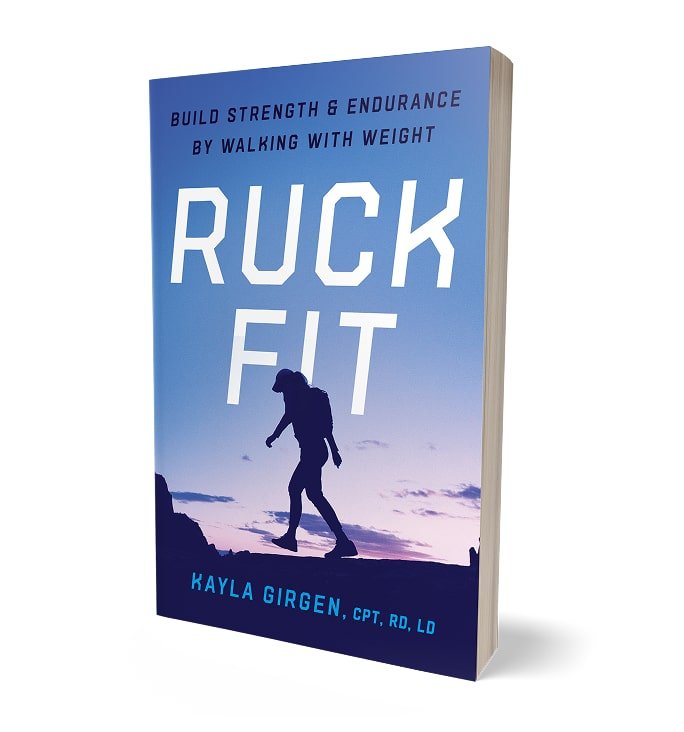
Ruck Fit is a first-of-its-kind practical guide on how to start rucking and level up your rucks if it’s something you’ve already been doing, with everything from 5K to 25K training plans and step-by-step instructions and images on how to use your ruck to build strength.
As a registered dietitian, I also had to include nutrition protocols to lose weight and balance your blood sugar, as well as mindset tips to get and stay motivated with your fitness routine. Rucking is not just an exercise; it’s a lifestyle!
Grab some weight, get outside, and get walking! 💪
Helping women lose weight without eating “perfect.” Learn how to balance blood sugar, build strength & overcome all-or-nothing thinking! Apply to learn more!
The posts on my website may contain affiliate links. When you make a purchase through any of the links, there is no additional cost to you, and I may earn a small (and very appreciated) commission. Thank you for your support!