

Last Updated on February 16, 2026 by Kayla
As GLP-1 weight loss medications like Wegovy, Ozempic, Mounjaro, and Zepbound surge in popularity, one critical piece of the puzzle is often missing: a clear nutrition plan.
If you’ve been prescribed a weight loss injectable such as semaglutide or tirzepatide, it’s unlikely that your doctor provided much, if any, dietary guidance to make the most of the medication.
GLP-1 medications can dramatically reduce appetite, but they don’t teach you what to eat to protect your metabolism, maintain muscle, and feel your best.
If you’re taking—or considering—a GLP-1 medication, this guide will help you:
- Understand how GLP-1 and GIP medications work
- Minimize side effects
- Lose fat while preserving muscle
- Build habits that support long-term success
To learn more about the nutritional risks and rewards of GLP-1 medications, check out the Sugar & Strength Podcast on Spotify or Apple Podcasts episode 5: What to Know About GLP-1 Medications: Weighing the Nutritional Risks and Rewards of Popular Weight Loss Drugs.
How do GLP-1 medications work?
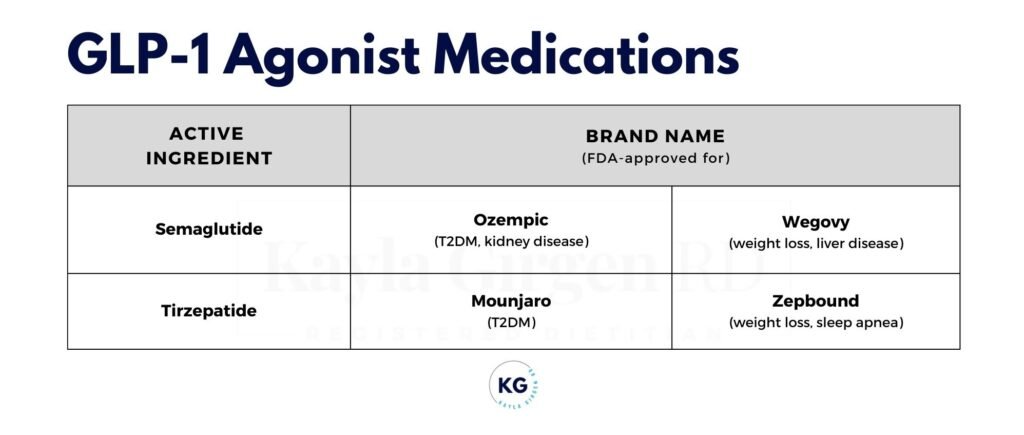
Ozempic and Wegovy both contain semaglutide. While each medication contains the same active ingredient, the dosing varies, and the brand names are different: Ozempic is prescribed for type 2 diabetes, while Wegovy is FDA-approved to treat obesity and liver disease.
Semaglutide is a GLP-1 “agonist” medication. Agonists mimic naturally occurring hormones; in this case, GLP-1, or “glucagon-like peptide-1.” Your digestive tract releases GLP-1 in response to food intake, and these medications amplify the signals.
GLP-1 slows gastric (stomach) emptying, making you feel fuller and helping control blood sugar. GLP-1 also acts on the brain’s reward center, decreasing appetite.
You may have heard of other GLP-1 medications, such as Mounjaro or Zepbound, which contain the active ingredient tirzepatide. Tirzepatide is a dual agonist and increases both GLP-1 signaling and GIP, or “gastric inhibitory polypeptide.”
Both GLP-1 and GIP are “incretins,” or gut-derived hormones. Many of the medication names are used interchangeably, so for clarification, here is a chart to depict the medications according to active ingredient and approved uses:
Retatrutide is a triple agonist that is currently in development. While GLP-1 agonists have shown promising weight loss results and improvements in cardiometabolic health, it’s important to recognize that no medication is without side effects.
Side Effects of GLP-1 Medications
The most common side effects of GLP-1 medications are nausea, vomiting, diarrhea, constipation, headaches, and fatigue, with nearly half of Wegovy users reporting nausea.
Symptoms and severity vary from person to person and will likely improve the longer you’re on the medication. Tirzepatide is usually better tolerated, but some users stop due to intolerance. Refer to the manufacturer’s website for the full list of side effects.
As you might imagine, these side effects can prevent a person from eating enough. You might think it’s a good idea to eat less, but too few calories or nutrients can have long-term negative effects, such as nutrient deficiencies, hair loss, and muscle wasting.
As a Registered Dietitian, one of my primary goals for clients taking Ozempic, Wegovy, or other GLP-1 medications is to manage side effects and optimize a diet plan to minimize muscle loss.
Learn how weight cycling and muscle loss are detrimental to long-term weight management on the Sugar & Strength Podcast: Muscle, Movement & Metabolism. In the meantime, here are a few tips to manage negative side effects and maximize nutrition.
Nausea Relief
One of the most frequently reported side effects of semaglutide is nausea. When you’re nauseous, it’s easy skip protein and opt for starchy foods like crackers or toast, which soothe your stomach, but spike blood sugar.
While hunger is reduced, thirst signals can decrease too, leading to dehydration. Insufficient fluid intake can worsen symptoms like nausea, headaches, and fatigue.
Experiment with cold or hot beverages to see what works best for your stomach. Clear, cold beverages are generally well tolerated. Carbonated water or electrolytes can also help you stay hydrated without upsetting your stomach.
I recommend Cure electrolyte drink mix to my clients who experience headaches, fatigue, or struggle to get enough fluids. Cure electrolytes have no added sugar and are free from artificial sweeteners and colorings. My favorite flavors are Strawberry Kiwi and Lemonade; use ‘KAYLA’ for 20% off your Cure order.
Aside from increasing your fluid intake, avoid drinking liquids with meals and eat slowly. Opt for bland foods and eat without distractions, or even take lunch outside, if you can. Take a short walk after a meal to ease nausea and aid digestion. Don’t lie down after eating, as this can make symptoms worse.

Constipation
Medications like GLP-1 agonists act directly on the gut, slowing down digestion. For some people, this can lead to constipation. Plus, with less food intake, your ‘output’ can naturally decrease.
Getting plenty of fluids and movement, like walking, can help prevent constipation and promote regular bowel movements. For some, coffee can help stimulate regularity; just be cautious of sugary coffee drinks.
One of my favorite supplements for easing constipation while taking semaglutide or tirzepatide is Calm Magnesium powder. Magnesium has a multitude of benefits and helps with constipation, stress, sleep, and muscle spasms. I recommend taking one scoop of Calm Magnesium powder in hot water about one hour before bedtime.
Headaches
Headaches occur for many reasons, ranging from dehydration to not eating enough.
First, assess your fluid intake and aim for 60 to 80 ounces daily. Proper hydration should be a key part of any semaglutide or tirzepatide diet plan. Flavored or electrolyte water can help. Choose sugar-free flavorings when possible.
If extra fluids don’t improve headaches, assess lifestyle factors like stress and poor sleep, which can contribute to recurring headaches.
Is a GLP-1 medication right for me?
Deciding to take a weight loss medication is a highly personal decision. It’s also important to recognize that there could be a cost to carrying extra weight too.
No medication comes without a trade-off, so here is a high-level and inconclusive overview of some of the pros and cons of GLP-1 drugs like Ozempic and Zepbound:
PROS
- Promising weight loss results
- Improved blood sugar control
- Reduced inflammation
- Less “food noise,” which may increase your capacity to facilitate new habits
CONS
- Side effects like nausea, vomiting, or diarrhea
- Increased risk for muscle loss
- Cost, especially if the medication is not covered by insurance
- The risk of weight regain, if the medication is stopped
Almost two-thirds of those who start a GLP-1 medication stop due to cost or side effects. For medications like Ozempic, Wegovy, or Zepbound, lifelong use is expected. It’s important to consider both the long-term financial commitment and the availability of each drug.
If you’re wondering whether a medication is right for you, talk with your doctor. Because no medication comes without risk, here are some questions to consider:
- Am I prioritizing myself by making time to prepare healthy meals, exercise regularly, and practice good stress management and sleep hygiene?
- What is my intention for seeking medication? Is it to improve health or for vanity?
- Do the risks outweigh the reward?
It’s important to recognize that medications are a tool, and everyone’s journey is highly unique. Most importantly, medications are not a substitute for lifestyle change; they supplement the hard work you’re already putting in.
Goals For Building a GLP-1 Diet Plan
As with any weight-loss plan, the ultimate goal should be to develop sustainable nutrition habits and exercise routines. The same goes when learning what foods to eat while on semaglutide or tirzepatide.
What’s different is that rather than managing a ravenous appetite, you may have to go out of your way to eat. Suppose you’ve lost interest in food or struggle to eat because of the side effects of the medication. In that case, it’s crucial to ensure you’re eating enough, specifically protein, to prevent muscle wasting.
Muscle helps you regulate blood sugar, maintain mobility, and “burns” more calories, so preventing muscle loss is a big deal. This is why yo-yo dieting is so detrimental.
When you lose weight, a proportion is muscle—about 10 to 25% per pound, on average. Some studies suggest that 30–40% of weight lost on GLP-1 medications may come from lean mass, especially without adequate protein intake and strength training.
For example, if you lose 10 pounds, 1 to 2.5 pounds might come from muscle under normal conditions. With weight loss medications like Wegovy or Zepbound, this could mean losing up to 4 pounds of muscle for every 10 pounds lost.
Drastic weight loss followed by weight regain means you lose muscle and gain fat—over and over again. Compounded over time, this leads to unfavorable changes in body composition that slow metabolism and make your clothes feel more snug—despite being at the same weight.
The good news is that there are a few actions you can take to maximize fat loss and maintain muscle. Learn more about personalized, dietitian-guided support on your GLP-1 journey.
Prioritize Protein
Unlike carbs and fat, your body doesn’t store protein. This is one reason you need an annoying amount of protein, ideally spread throughout the day.
The average American eats 10 grams of protein at breakfast, when the body needs it most. To optimize muscle mass, aim for 30+ grams of protein with your first meal of the day.
Most of the women I work with feel most satisfied and energized when they consume at least 100 grams of protein daily. To reach this benchmark, you may need to rely on a protein shake or supplement, especially in the early days of starting a medication like semaglutide.
Check out my recipes page for high-protein, blood sugar-friendly meals and snacks!
What To Eat While On a GLP-1 Medication
Besides protein, other foods to eat while on a GLP-1 medication include healthy fats and what I call “slow” carbs. Slow carbs are minimally processed whole foods filled with fiber, which naturally promote GLP-1, improve gut health, and help prevent side effects like constipation.
To create a personalized GLP-1 diet plan, download my free dietitian-approved grocery list, which provides a complete breakdown of foods to eat.
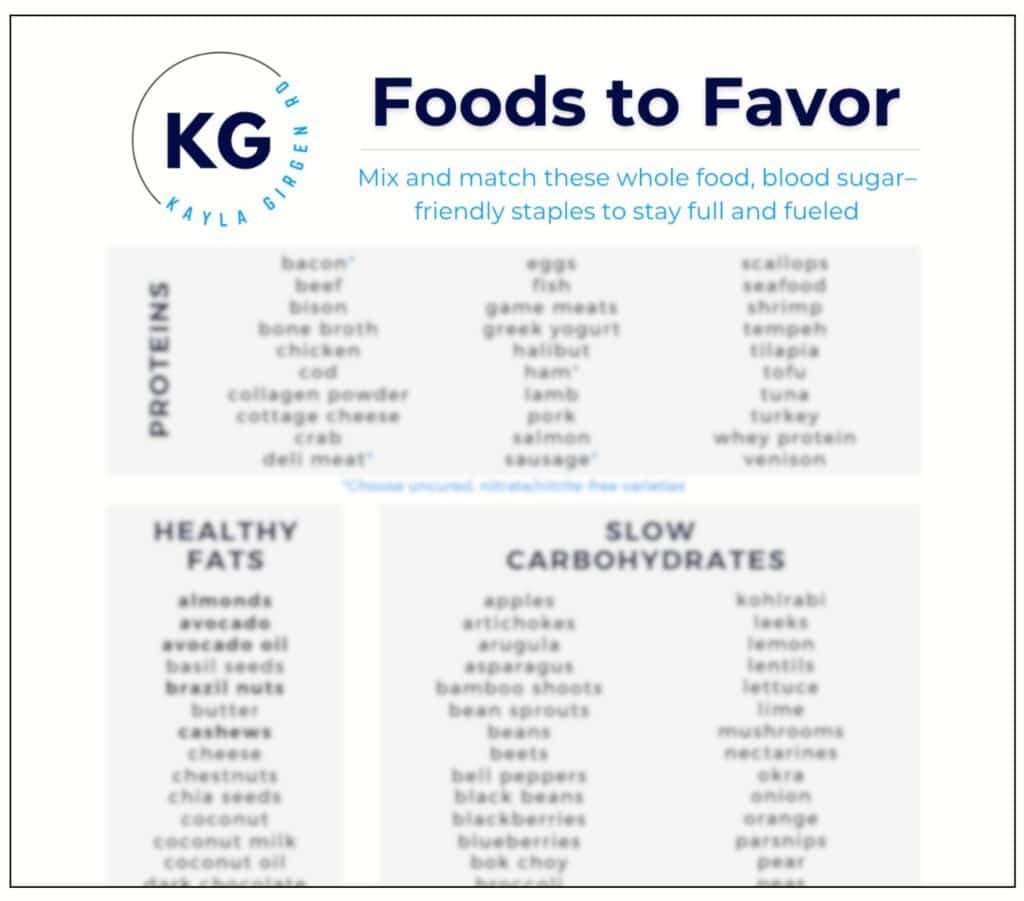
While this list emphasizes which foods to prioritize, I encourage my clients to follow the 80-20 principle. Make 80 percent of your food choices from this list; for the remaining 20 percent, no food or drink is off-limits.
A Case For Weights
Last but certainly not least, I can’t stress the importance of strength training in combination with your GLP-1 diet plan enough. Your muscles need a stimulus to stay strong and metabolically healthy. If you don’t use your muscles, you lose them.
It’s much easier to keep the muscle you already have than to lose weight, then try to put muscle back on. Instead, aim for fat loss, not just “weight” loss.
Two to three 20-minute strength sessions per week can do the trick. Find a routine that works for you, and if you’re not sure where to start, read my post on rucking for women. While rucking doesn’t replace strength training, it’s a low-impact, weight-bearing activity that can help you build strength and endurance at the same time.
Summary
I’m not pro- or anti-medication. I consider myself “agnostic” about GLP-1 medications. These drugs can be incredibly helpful tools, but they don’t replace nutrition and lifestyle.
As a Registered Dietitian, my role is to help women navigate their weight loss journey—whether they choose to use medications or not—without shame, confusion, or muscle loss.
It’s important to weigh what you have to gain and what you have to lose. Because regardless of how you lose weight, there is one priority to stay hyper-focused on: protecting your muscle and your metabolism.
If you choose to use a GLP-1 medication, avoid common mistakes like eating too little protein, skipping meals, neglecting hydration, and failing to make strength training a priority. These habits don’t just support better results now, they determine whether you’ll be able to maintain those results long term.
Most importantly, remember this: the medication doesn’t create the outcome—you do.
The habits you build while taking it are what ultimately shape your strength, your metabolism, and your future health.

Helping women lose weight without eating “perfect.” Learn how to balance blood sugar, build strength & overcome all-or-nothing thinking! Apply to learn more!
The posts on my website may contain affiliate links. When you make a purchase through any of the links, there is no additional cost to you, and I may earn a small (and very appreciated) commission. Thank you for your support!