

Last Updated on December 2, 2025 by Kayla
Do you love walking but feel like it’s not enough? Or maybe you want to add strength training to your routine without spending hours in the gym? If so, rucking might be exactly what you’re looking for.
In this post, you’ll learn:
- What rucking is
- Why rucking is such an effective exercise—especially for women
- How to get started—including my favorite rucking gear
After reading this post, you’ll know how to level up your workouts and utilize your multitasking skills with minimal disruption to your current routine.
Let’s get started!
What is rucking?
Simply put, rucking is walking with weight. If you’ve ever worn a backpack filled with textbooks or hiked in the woods, you’ve rucked.
Rucking has its roots in military training, and it has become a popular, low-impact workout for civilians. Think of it as strength training and cardio rolled into one—and done outdoors.
You can easily adjust the difficulty by changing your terrain, pace, or weight. Whether you’re walking around the block or on a trail, rucking allows you to challenge yourself at your own pace.
Why women should ruck
Rucking is an excellent exercise for everyone—but especially women.
Women are built to carry, and frankly, we’re better at it than men. Our lower center of gravity gives us a natural advantage when it comes to balance and stability—both of which are essential for rucking.
Beyond biomechanics, rucking for women offers unique physical and mental benefits.
Physical benefits of rucking
Rucking blends strength training with the heart-healthy benefits of cardio. It’s the ultimate multitasking workout, perfect for women who want to get stronger, leaner, and more energized without adding hours to their day.
Beyond saving time, the benefits of rucking for women include:
- Boosting bone density: Weight-bearing exercise helps strengthen bones and reduce osteoporosis risk, which is especially critical for women in perimenopause.
- Improving body composition: You’ll burn calories, build muscle, and lose fat simultaneously.*
- Supporting blood sugar balance: Great for improving insulin sensitivity and managing cravings.
- Strengthening joints: Rucking is a low-impact way to safely build endurance and strength.
- Enhancing posture and core strength: Carrying weight properly engages your core, back, and shoulder muscles, making it the perfect antidote to sitting.
*Note: Rucking complements but does not replace traditional strength training.
Not to be overlooked, the psychological benefits of rucking are meaningful too. Time in nature is known to alleviate stress and anxiety and elevate mood.
Emotional benefits of rucking
Rucking provides more than just physical benefits. Time outdoors helps:
- Reduce stress and anxiety
- Boost mood and mental clarity
- Foster gratitude and mindfulness
And for women who’ve undergone bariatric surgery or lost significant weight, rucking can be a powerful non-scale victory. Carrying even a fraction of the weight you’ve lost reminds you how far you’ve come—both physically and emotionally.
Rucking vs walking
To demonstrate the effectiveness of rucking versus walking, here’s a comparison of a one-mile walk versus a one-mile ruck with 20 pounds. Granted, these were my numbers, and fitness trackers aren’t 100 percent reliable, but you catch my drift—rucking is harder!

Same route. Same elevation. Same distance and pace. Yet, by carrying an extra 20 pounds, I increased the intensity of the walk with one simple change.
By adding weight to your walk, you build strength and endurance in the same amount of time—and without needing a gym or fancy equipment.
If you’re ready to give rucking a go, here’s how to get started with the equipment you already have on hand.
How to start rucking
Rucking doesn’t have to be costly or complicated. You can easily ruck on a budget with gear you already have.
Simply grab a backpack and add some weight—a dumbbell, water bottles, or old textbooks—and go for a walk.
I started by putting a 10-pound dumbbell wrapped in a bath towel in a backpack. Once I realized rucking was going to be a frequent occurrence for me, I leveled up my setup by purchasing ruck plates.
Ruck plates easily slip into the laptop pouch or water reservoir compartment of a backpack or hiking pack you already own.

I like this set of two 10-pound plates with straps. Being able to tether the plates together helps with stability and prevents the weights from clanking together. Additionally, having two 10-pound plates offers more scalability and flexibility compared to one 20-pound plate.
Rucksack vs backpack
As you build endurance and increase the weight load, it helps to have a sturdy rucksack with padded shoulders.
Once you start carrying more weight—say 20 pounds or more—on a consistent basis, you’ll begin to appreciate the difference between a rucksack versus a backpack.
A typical backpack isn’t rated to carry heavy weight over long distances. A rucksack, however, is more durable and is meant to go the long haul. The handles and stitching are reinforced to tolerate a heavier load and hold the weight more appropriately.
I’ve tested several packs and love the GORUCK Rucker 4.0 for longer rucks and ruck plate carrier for rucks around the neighborhood. The Rucker 4.0 is built for rucking, and with handles on all sides, you can use it for strength training exercises too!
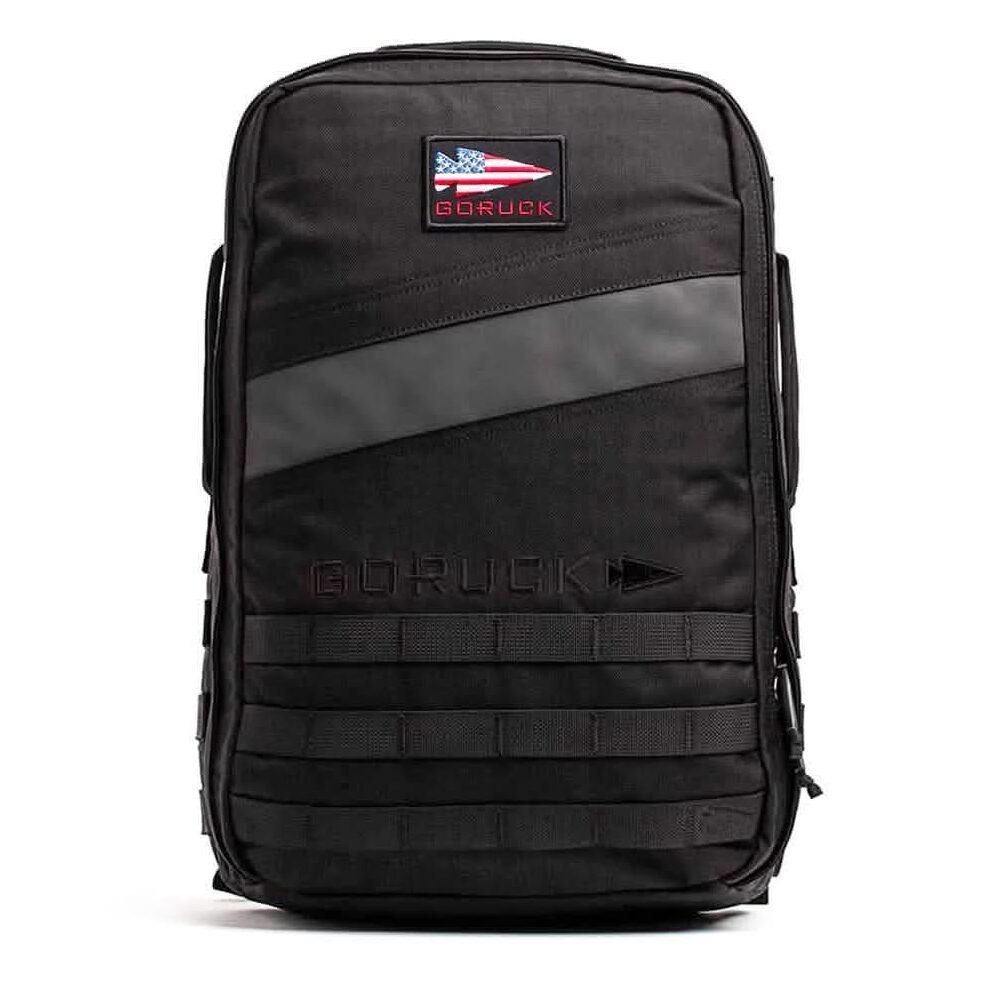
With a lifetime guarantee and 1% of profits donated to non-profits who support those who serve—military, Veterans, First Responders, teachers, social workers, and military spouses—I love knowing that my dollars are well spent with GORUCK.
Weighted vests provide another option to add weight to your walks, but there are key distinctions you should know about weighted vests versus rucksacks.
Regardless of how you choose to carry the load, I recommend starting with 10 to 15 pounds—maybe even an empty backpack, depending on your fitness level—and, as you acclimate to the weight, increase by 5 to 10-pound increments.
Summary
Rucking is an easy, effective way to ramp up your existing walking routine. You can begin with equipment you already have on-hand and upgrade your gear when you’re ready.
Experiment with different terrains and speeds to change the intensity of your ruck, and begin to experience numerous physical and emotional benefits of rucking.
To dive deeper into rucking—including the science behind the exercise, rucking-focused training plans, and step-by-step exercise tutorials—pre-order my book Ruck Fit: Build Strength and Endurance by Walking with Weight.

It’s packed with practical training tips, expert gear recommendations, and dietitian-approved nutrition strategies—everything you need to build strength, boost endurance, and feel confident from the inside and out.
Whether you’re just starting out or ready to take your rucking to the next level, this book is your complete guide to becoming stronger, fitter, and more empowered every step of the way.
Grab your copy of Ruck Fit and follow me on Instagram for even more rucking tips, workouts, and inspiration!
Time to ruck and roll! 🤘

Helping women lose weight without eating “perfect.” Learn how to balance blood sugar, build strength & overcome all-or-nothing thinking! Apply to learn more!
The posts on my website may contain affiliate links. When you make a purchase through any of the links, there is no additional cost to you, and I may earn a small (and very appreciated) commission. Thank you for your support!