

Last Updated on October 5, 2025 by Kayla
Are you tired of counting calories and looking for a sustainable way to lose weight? If so, using CGM for weight loss is one way to implement personalized solutions and adapt your eating behaviors for good.
As a Registered Dietitian and online CGM Coach, I recognize that weight loss isn’t one-size-fits-all. Everyone has unique circumstances and lifestyle factors that impact their ability to lose and maintain weight.
CGM, or continuous glucose monitoring, is an effective, data-driven tool that can help identify patterns in your metabolism and reveal insights about how various foods impact your blood sugar levels. CGM provides flexibility to enjoy foods you love without being overly restrictive.
Keeping reading to learn more about CGM for weight loss, including the benefits, drawbacks, and whether CGM is right for you.
What is CGM?
CGM stands for “continuous glucose monitoring.” Originally designed to help people with diabetes monitor their blood sugar levels, CGM allows you to view glucose readings in real-time—without the need for finger pricks.
Compared to traditional finger sticks, CGM technology tracks glucose continuously, taking readings every 1 to 5 minutes, depending on the sensor. The data is sent to an app on your phone, allowing you to monitor trends and see how specific foods, exercise, and stress impact your blood sugar levels.

Whether or not you have diabetes, CGM is a powerful tool to help you understand how your body’s behaves and makes habit change more engaging. CGM puts you in the driver’s seat to manage symptoms of blood sugar imbalance and gives you the power to make informed decisions about your health.
How does CGM work?
Continuous glucose monitoring (CGM) works by applying a small sensor, about the size of a quarter, to the back of your arm. The device has a small microfilament that sits underneath the skin’s surface and measures glucose levels in interstitial fluid, or the fluid between your cells.
Technically, CGM does not provide “blood” glucose readings. Instead, glucose data from between the cells is extrapolated to predict blood glucose levels.
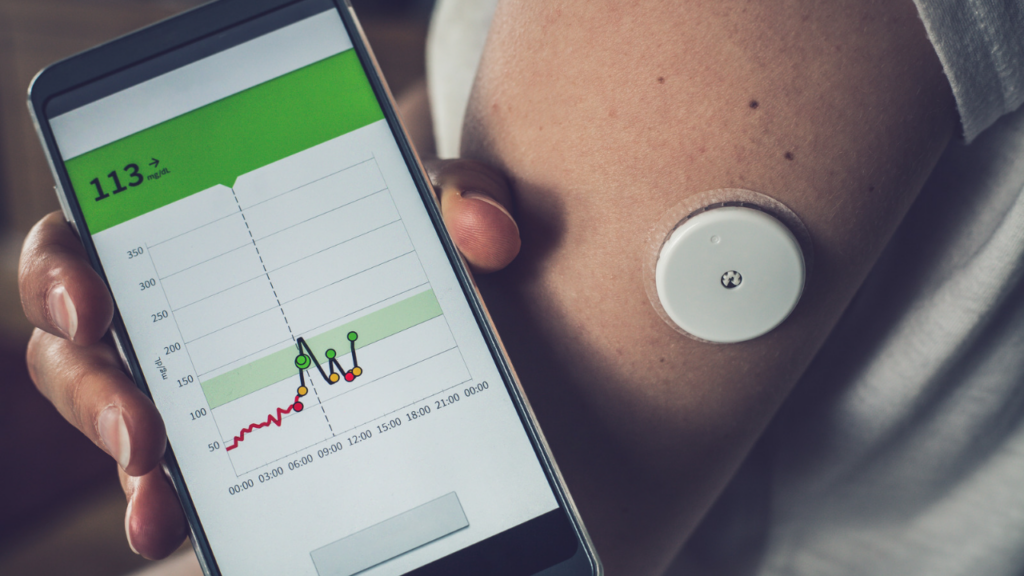
In the United States, a prescription is no longer needed to obtain sensors. Two popular over-the-counter options are the Dexcom Stelo and Libre Lingo. To learn more about getting started with CGM, including the pros and cons of each sensor, download my free CGM guide.
CGM sensors are single-use and typically last 10 to 15 days. While there’s a bit of setup upfront, CGM makes tracking glucose for weight management easy and convenient, giving you 24/7 insights into how your body responds to food, exercise, and lifestyle habits.
Benefits of using CGM for weight loss
Tracking glucose levels throughout the day is an invaluable tool for both people with diabetes and non-diabetics.
CGM provides useful, personalized data about how your body responds to different foods and activities, including:
- real-time glucose readings without the need for finger pricks
- learn how certain foods affect glucose
- glucose response to non-food factors such as exercise, stress, sleep, illness, medications, caffeine, alcohol, and more
- ability to receive alerts for high and low glucose readings
Whether you wear a CGM sensor for two weeks or two years, personal insights like this help you predict how specific foods and non-food factors affect your health and weight loss. Using CGM for weight loss empowers you to eat and move in ways that work best for you.
For example, this client was shocked by her blood sugar response after eating a banana.
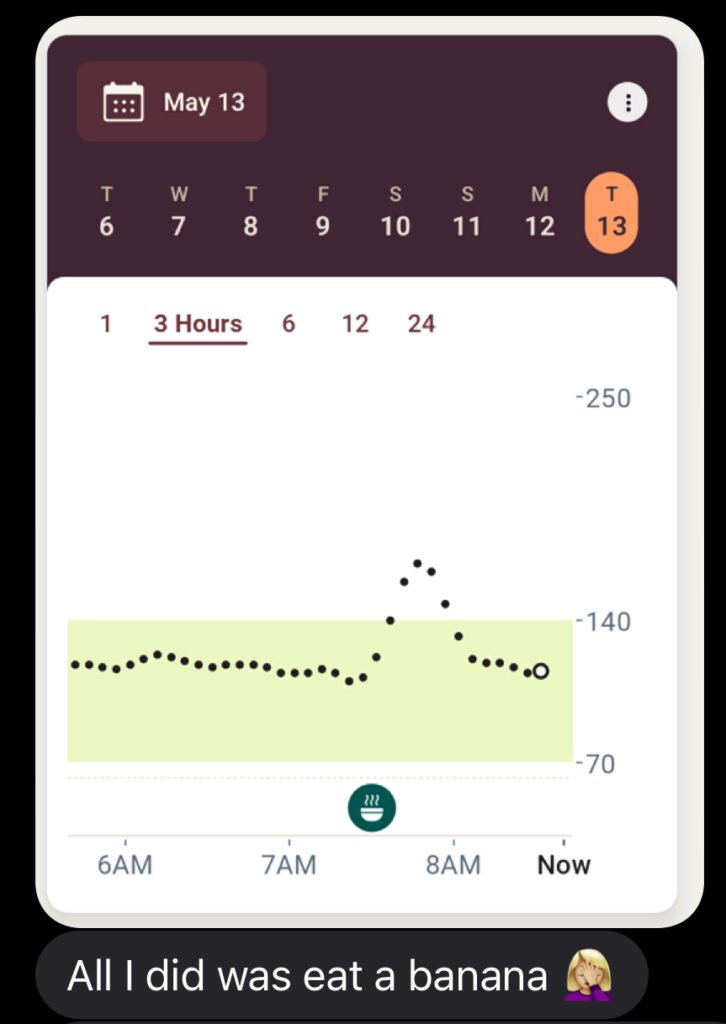
CGM helps you become more aware of the physical and emotional factors that impact your eating behaviors, leading to a more holistic approach to weight loss.
With any new technology, though, there are downsides. Let’s take a look at some of the disadvantages of continuous glucose monitoring.
Disadvantages of CGM
Despite its advantages, CGM is not without its downsides. The disadvantages of CGM include:
- cost of CGM supplies and monitoring, which may not be covered by insurance
- potential for inaccurate readings
- measures only glucose (fructose and insulin readings are not captured)
- lack of knowledge on how to interpret data
Information overload can be one disadvantage of CGM. For this reason, hiring a coach who understands the importance of blood sugar balance or choosing a CGM service that includes dietitian services is helpful.
Popular CGM subscription services like NutriSense, Signos, and Levels can cost up to $399 per month. If you’re willing and able to make the investment, using CGM for weight loss can be a game-changer.
How to use CGM to lose weight
Using CGM for weight loss is an invaluable tool to help make informed choices about what you eat and how you move.
Specifically, CGM reveals how your body responds to carbohydrates and your favorite foods. This includes learning how “healthy” foods impact your glucose levels—like the aforementioned banana.
With CGM, you can experiment with different nutrition strategies to reduce glucose curves and improve your metabolic flexibility—the ability to switch between glucose and fat to fuel your body.
You can also “see” what foods trigger steep spikes and large drops, leading to low energy, anxiety, sugar cravings, and hunger shortly after eating.
One tactic I teach my clients to prevent blood sugar spikes and crashes is to “cushion carbs.” Pairing carbohydrates with other macronutrients, like protein, fat, and fiber, you can minimize the symptoms of blood sugar imbalance.
To help select blood sugar-friendly food options, download a free copy of my dietitian-approved grocery list, which includes a mini email series on macros for weight loss.
Overall, CGM allows you to create a flexible, personalized weight loss plan that works for you. With continuous feedback from CGM, you’ll learn how to enjoy foods you love without tediously counting every calorie or being overly restrictive with your food choices.
As a result, losing weight with CGM is both informative and rewarding, making it more likely that you change your eating behaviors for the long haul.
Summary
While CGM has its drawbacks, such as cost, the benefits far outweigh the downsides. Learning how specific foods and lifestyle factors influence your glucose levels empowers you to make informed and proactive decisions regarding your metabolic health.
As a Registered Dietitian, I’ve come to appreciate how many of today’s chronic health conditions—including heart disease, obesity, and diabetes—stem from blood sugar imbalance. This is why I created the Sugar + Strength Academy to teach women how to manage their blood sugar to lose weight and keep it off for good!
Learn more about working with me and apply for small group or private coaching with CGM today!

Helping women lose weight without eating “perfect.” Learn how to balance blood sugar, build strength & overcome all-or-nothing thinking! Apply to learn more!
The posts on my website may contain affiliate links. When you make a purchase through any of the links, there is no additional cost to you, and I may earn a small (and very appreciated) commission. Thank you for your support!