
Last Updated on October 6, 2025 by Kayla
Many of us are all too familiar with feeling stressed out. You might associate stress with low productivity and feeling overwhelmed, but did you know that too much stress diminishes your ability to lose fat?
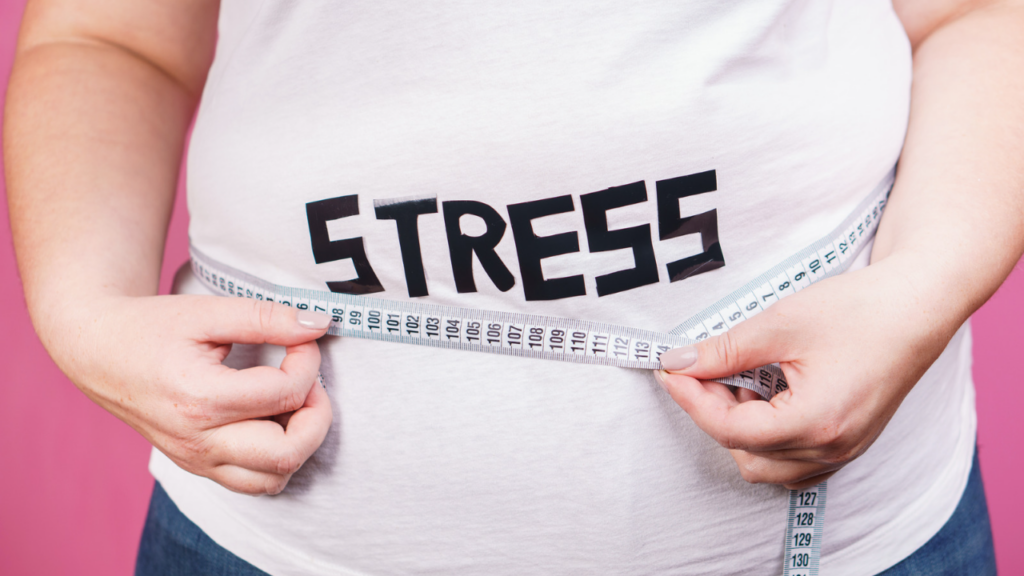
Stress-related weight gain is a very real problem for many people. Today, you’ll learn how hormones (not calories) might be impacting your weight loss stall and what you can do about it.
Cortisol and weight gain
When your body is stressed – whether it’s from physical or mental stress – a hormone called cortisol is released. Cortisol helps manage stressful situations by providing energy and preparing you for a fight-or-flight response.
For our ancestors, this natural defense mechanism was vital for running away from predators and catching food. Today, we encounter less physical stress and more prolonged mental stress. When cortisol is constantly released through chronic stress, it quickly leads to weight gain.
This is because cortisol raises blood sugar and promotes fat storage to provide energy during times of stress. A little bit of cortisol every so often is no big deal, but if you’re stressed all the time, you risk losing muscle and gaining fat. Not a great recipe for success.

How body composition changes with chronic stress
The “stress hormone” cortisol is released due to physical stress (eg. working out) and mental stress, and chronic cortisol exposure changes your body composition in several ways.
Reduced muscle gains
When it comes to exercise, some cortisol is a good thing and a very normal part of your physiology. An intense workout or strength training session, for example, increases cortisol.
Too much cortisol, however, can increase muscle breakdown, which is not a good thing. So if you’re stressed out and sleep-deprived, you could be doing more harm than good by getting up early or staying up late to get in a workout. Listen to your body!
Increased fat storage
One double whammy of chronically elevated cortisol is that you lose muscle and gain fat – especially around the midsection. Fat storage in the belly region, otherwise known as visceral fat, is stored around your organs and wreaks metabolic havoc on your liver and other vital organs.
This results in insulin resistance and further impedes your ability to lose weight. In addition, increased belly fat storage resulting from high cortisol is a risk factor for many chronic diseases like obesity, diabetes, and heart disease.
Appetite changes
Stress is a dangerous disruptor of not only internal physiology, but also, exterior dietary habits. When you’re stressed, cortisol can increase appetite and cravings for carbs, sugary, and fatty foods. Does this sound familiar?
On top of less-than-ideal food choices, feelings of anxiety and overwhelm can cause overeating and ultimately lead to weight gain. The easiest way to prevent stress-related weight gain and avoid burnout is by making healthy lifestyle changes.

How to balance stress and rest
Losing weight is hard enough without worrying about stress getting in the way. The good news is that there are things you can do to minimize the impact of stress on your fat loss goals.
Prioritize sleep
The connection between sleep and weight loss is undeniable. When you don’t get proper rest, your body remains in a low-grade state of inflammation, and it’s difficult to balance your blood sugar and make progress toward your goals.
Try setting a bedtime, and aim for 7-9 hours of sleep per night. Dim the lights, avoid screens, and read or do some light stretching before you settle into bed.
Practice good self-care
Self-care is more than bubble baths and pedicures. Proper self-care includes eating healthy, moving your body, sleeping well, and setting aside time for reflection.
It’s true that you can’t pour from an empty cup. So take just 5 minutes to yourself each day to read a book, go for a walk, meditate, or spend time in prayer – whatever activity fills your cup, do it!
Establish strong coping mechanisms
Think about how you cope with stress. For example, do you stress eat or do you channel your feelings in healthier ways like journaling or movement? Perhaps, you have a difficult time deciphering physical versus emotional hunger?
Whatever your current mechanisms are for coping with stress, give yourself some space and grace as you find solutions to manage the overwhelm and bring those cortisol levels back to baseline. Change takes time!
Words from the Wise
Almost everything will work again if you unplug it for a few minutes, including you.
Anne Lamont
What do you do when technology doesn’t cooperate? You unplug it! 📵 Well, the same strategy can be used to decompress and reduce stress in your world.
In the end, stress impacts far more than our mood—it shapes our body composition, energy, and overall health.
It’s another reason I love rucking for women—it’s a simple way to unplug, move your body, and release stress while building both mental and physical strength.
If you’re ready to find your own version of balance and resilience, I’d love to help. Apply today for one-on-one and small group coaching.

Helping women lose weight without eating “perfect.” Learn how to balance blood sugar, build strength & overcome all-or-nothing thinking! Apply to learn more!
The posts on my website may contain affiliate links. When you make a purchase through any of the links, there is no additional cost to you, and I may earn a small (and very appreciated) commission. Thank you for your support!