

Last Updated on January 6, 2026 by Kayla
Metabolic flexibility is how well your body switches between fuel sources—carbs and fat—and plays a critical role in metabolic health.
A metabolically flexible body can:
- Burn glucose when it’s readily available
- Shift to burning fat when glucose runs low
- Switch smoothly between the two without energy crashes
When metabolic flexibility is strong, your body can access stored energy (i.e., fat) efficiently without signs of blood sugar imbalance, such as cravings and energy slumps.
Frequent blood sugar spikes—from constant snacking, stress, or poor sleep—compromise metabolic flexibility and contribute to visceral fat accumulation. Visceral fat is the deep abdominal fat stored around the liver and other vital organs, which exacerbates metabolic inflexibility.
Visceral fat is a sign that your metabolism has become less adaptable and more reliant on quick energy (primarily carbohydrates). It reflects poor fuel partitioning—meaning your body struggles to store and access energy efficiently—and is ultimately a fuel storage problem, not a willpower issue.
Understanding how visceral fat develops helps explain metabolic flexibility, including the connection between the two.
The good news is that you can improve metabolic flexibility, restore blood sugar balance, reduce inflammation, and manage your appetite. By prioritizing metabolic health over a number on the scale, you’ll lose fat and set yourself up for long-term success.
Now put on your best flannel and get Midwestern with me for a moment.
How Visceral Fat Impacts Metabolic Flexibility
Picture this: you’re out ice fishing (or camping for my non-Midwesterners). It’s bitterly cold, and your generator is humming away—powering the heater, the lights, and maybe even a crockpot of chili (because that’s how we do it up here!).
Now, imagine your liver as a generator.
Your liver’s job is to keep everything running smoothly. It’s responsible for whether you burn energy right away or store it for later, as well as blood sugar regulation, fat breakdown and storage, and toxin removal.
Like a generator, the liver works best when demand matches capacity. When demand outpaces the liver’s capacity, fuel storage is affected, promoting visceral fat accumulation. Let’s take a closer look.
How Visceral Fat Develops
In modern life, digestive organs, including the liver and pancreas, are often running overtime.
Eating excess sugar and constant snacking, for example, cause repeated blood sugar spikes, requiring a consistent supply of insulin (our “storage hormone”) to shuttle glucose out of the bloodstream and into the body’s cells.
When your body is continuously digesting and absorbing food—like when you eat six small meals a day—your pancreas works overtime to churn out insulin. Additionally, your liver—the digestive orchestrator—tries to keep up by storing extra fuel close by.
From a survival standpoint, this is smart. If energy is constantly needed, it’s more efficient to store fuel right next to the generator (i.e., liver) than to send it farther away. It’s like having a spare gas can right next to the generator versus going to the gas station for a refill.
These nearby fuel reserves, however, are visceral fat—fat stored deep inside the abdomen, wrapped around the liver and other vital organs. Under normal circumstances, excess fuel (i.e., calories) is stored “farther away” as subcutaneous fat—fat under the skin.
Ironically, many people fixate on subcutaneous fat (eg., “love handles,” “saddle bags,” and excess “fluff”), which is less metabolically harmful than visceral fat.
Why Visceral Fat Disrupts Blood Sugar and Energy
A few spare gas cans nearby? No big deal.
But when the area around the generator becomes cluttered, parts overheat and efficiency drops. The liver is overburdened, and you begin to notice signs of blood sugar imbalance.
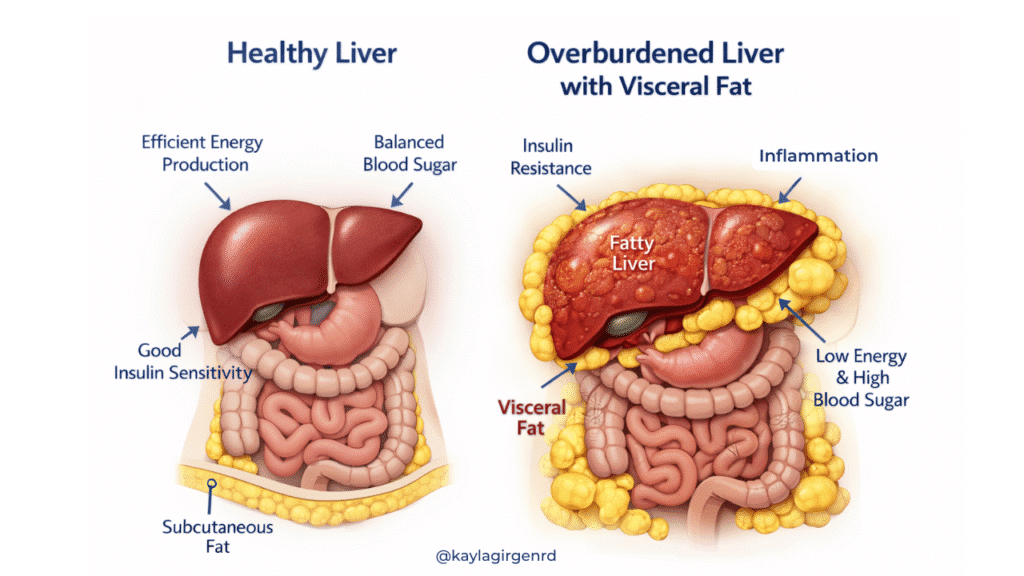
Visceral fat is strongly linked to metabolic disease because it:
- Disrupts blood sugar regulation
- Interferes with fat storage and fat breakdown
- Starves cells; even when fuel is nearby, your cells struggle to utilize it, leaving you tired and hungry, especially for “quick” energy like carbs and sugar
- Promotes chronic inflammation
- Contributes to insulin resistance, fatty liver disease, and metabolic dysfunction
Visceral fat usually isn’t obvious, but it’s metabolically loud.
It’s why someone who looks lean or has a “normal” BMI still struggles with low energy, cravings, and worsening lab markers. You’re thin, but metabolically unwell. This is sometimes referred to as being “skinny fat.”
On the other end of the spectrum, many diagnostically “obese” individuals have exceptional bloodwork and are metabolically healthy. You can’t draw conclusions about a person’s metabolic flexibility from their weight or BMI alone.
Whether you’re looking to lose weight, improve your metabolic health, or both, there are plenty of nutrition and lifestyle habits you can practice to increase your metabolic flexibility.
Burn Fuel Smarter, Not Harder
Unfortunately, you can’t spot reduce abdominal fat or work your “visceral fat muscle.” It takes a combination of healthy nutrition and lifestyle factors to improve metabolic health.
By prioritizing metabolic flexibility, outcomes like weight loss, steady energy, and sustained performance become byproducts of your hard work and ensure long-term success.
Ultimately, the goal is to help your body:
- Utilize and store energy correctly
- Access fat stores more efficiently
- Switch smoothly between burning glucose and fat for fuel
Seamlessly carrying out these processes is a sign of good metabolic flexibility, much of which is tightly linked to blood sugar control.
Continuous glucose monitoring (CGM) is an incredibly powerful tool for seeing real-time blood sugar trends and gaining insight into your metabolic flexibility. CGM shows how your food and lifestyle affect your blood sugar, and therefore, how hard your liver and other digestive organs have to work to keep up.
You’re empowered with visual data to make positive changes—like the following—which aids motivation and adherence. My Blood Sugar Breakthrough Program is the perfect introduction to CGM and all things metabolic health.
Regardless of whether you use CGM, there are plenty of habits you can implement to maximize your metabolic flexibility.
But don’t expect results overnight. It can take weeks or months to chip away at stubborn visceral fat. Rest assured that your hard work is paying off in ways you can’t see—yet (this is another reason CGM can be helpful in the short term!).
Here are my top five recommendations for reducing visceral fat and improving metabolic flexibility.
Limit Added Sugars and Refined Carbs
Sugary drinks, ultra-processed foods, and constant snacking spike blood sugar, requiring insulin and encouraging visceral fat storage.
Begin by reducing your intake of sugar-sweetened beverages—like soft drinks, sweet teas, and sugary coffee drinks—which have the greatest impact on blood sugar. Fructose, which is digested exclusively by the liver, contributes to visceral fat when consumed in large quantities.
CGM insight: Observe your personal carb tolerance and see which foods and drinks keep your glucose steady versus which ones overload your system.
Avoid or Reduce Alcohol
Alcohol is a toxin and gets priority status from the liver, meaning it’s metabolized first and diverts the liver from its normal fat-burning duties. Excess intake contributes to liver stress and visceral fat accumulation.
CGM insight: Depending on the type of liquor consumed, many people are surprised by the initial drop in glucose but later rebound in appetite, poor sleep, and blood sugar control.
Move Your Body
Exercise is an effective way to improve metabolic flexibility. Resistance training increases glucose uptake and insulin sensitivity, while cardiovascular movement enhances the transition between using fat and carbs for fuel.
Any movement is better than none, so avoid lofty goals that keep you glued to the couch. Even 20–30 minutes most days helps your liver burn through stored fuel instead of stockpiling it.
Get the best of both worlds and learn more about my favorite low-impact exercise—rucking—check out my book RUCK FIT: Build Strength and Endurance by Walking with Weight to see the transformational effects of this simple practice.
CGM insight: Any movement, but especially after a meal, lowers glucose and improves future meal responses.
Prioritize Protein and Fiber
Protein helps preserve lean muscle, which supports your metabolism. Protein, combined with fiber-rich foods (vegetables, legumes, whole grains) and healthy fats, helps regulate blood sugar and reduce fat accumulation around organs.
Download my free Foods to Favor list for a complete, dietitian-approved list of minimally-processed, blood sugar-friendly foods.
CGM insight: Balanced meals result in smoother, flatter glucose curves, which help manage your energy, appetite, mood, and weight.
Manage Stress and Protect Sleep
Chronic stress drives cortisol production, which signals your body to store fuel close to the liver “just in case.”
Poor sleep worsens insulin resistance even without dietary changes. One of my favorite features of CGM is that you can “see” how your lifestyle impacts your health.
CGM insight: Stress and sleep deprivation often raise glucose independent of food.
While these five factors help improve metabolic flexibility, they are not the only ones. Strategies such as intermittent fasting, macronutrient pairing, and others can help. For a deeper dive, check out my Blood Sugar Breakthrough Program.
Blood Sugar Breakthrough Program
If you’re looking for a metabolic reset to stop guessing how your metabolism works and see how your body handles fuel, this is exactly what you get inside my Blood Sugar Breakthrough Program.
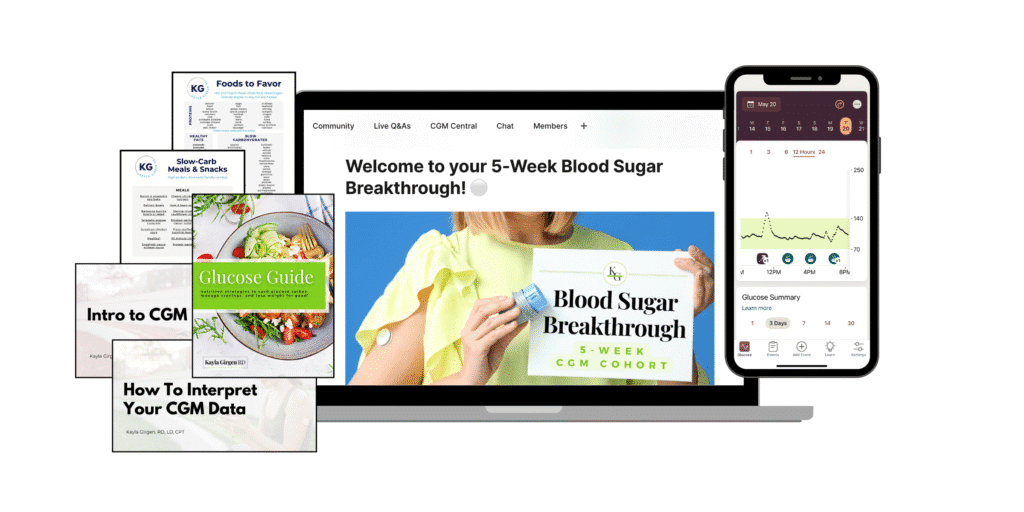
In just five weeks, you’ll go from a glucose beginner to a blood sugar expert. You’ll learn how to use personalized CGM data to:
- Understand and interpret your unique blood sugar patterns
- Identify hidden drivers of visceral fat and insulin resistance
- Improve metabolic flexibility without extreme dieting
- Support long-term energy, liver health, and fat loss
For more information, check out the program FAQs.
👉 Join the Blood Sugar Breakthrough Program and get a clear, data-driven view of your metabolic health, so your generator can run strong without running itself into the ground.
You’ll walk away with insights that will last a lifetime and change the way you think about food.
Not ready right now? Join the waitlist to receive updates on upcoming sessions.
For more on metabolic flexibility, blood sugar balance, nutrition, and wellness, sign up for my Win The Week newsletter and receive free tips to your inbox every Monday morning.

Helping women lose weight without eating “perfect.” Learn how to balance blood sugar, build strength & overcome all-or-nothing thinking! Apply to learn more!
The posts on my website may contain affiliate links. When you make a purchase through any of the links, there is no additional cost to you, and I may earn a small (and very appreciated) commission. Thank you for your support!